

Water damage looks different on wall-to-wall carpet than on an area rug. Wall-to-wall carpet sits over a foam or fiber pad, tacked to the subfloor. Once water reaches that pad, it spreads under the whole room, not just one section.
Homeowners cannot lift the carpet to check underneath the way they can with a rug. That makes wall-to-wall water damage harder to judge and easy to underestimate.
How Water Moves Through Carpet and Padding
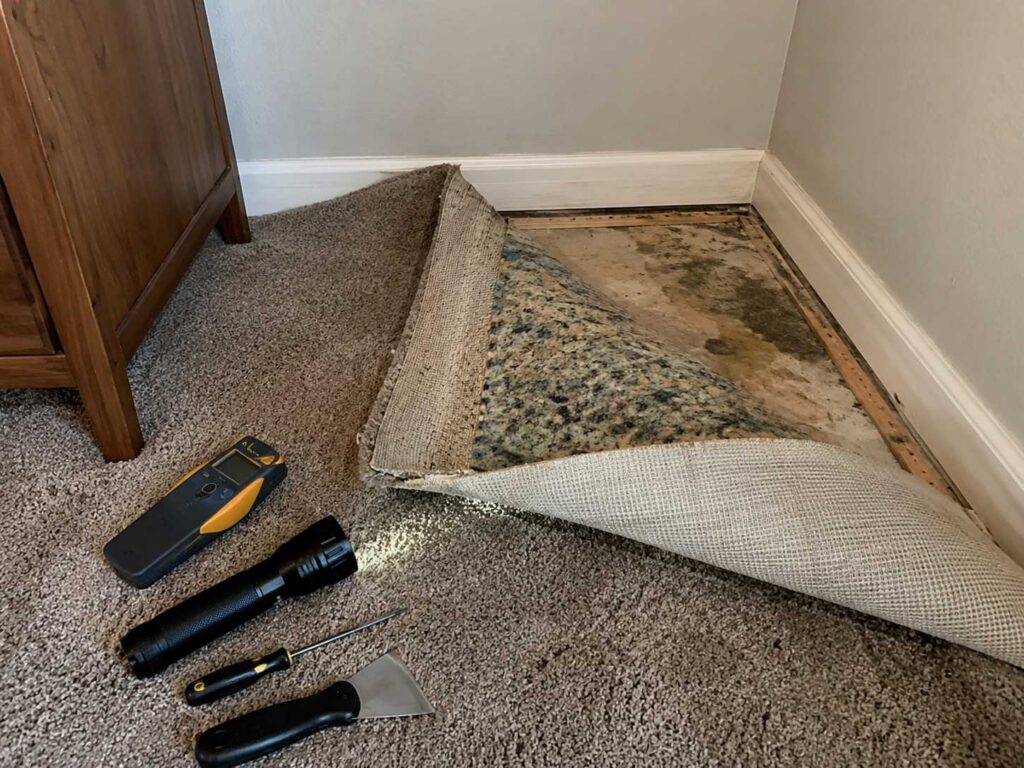
Water travels down through carpet fibers first, then into the backing. From there, it pools in the padding underneath. Padding acts like a sponge. It holds moisture long after the surface carpet feels dry to the touch. Carpet can look fine one day and smell musty three days later. The padding, not the carpet itself, is usually the real problem.
Warning Signs the Padding Is Already Damaged
A few signs point to trouble below the surface. Carpet that feels spongy or squishy underfoot is one. A faint musty smell near baseboards is another. Discoloration along the edge of a room often means water traveled further than expected. Cold or damp spots on the floor, even after the surface dries, suggest moisture is still trapped in the pad.
Why Mold Risk Rises Fast
Mold spores are already present in most homes. They only need moisture and time to grow. Wet carpet padding creates both conditions at once. Mold can begin forming within 24 to 48 hours of water exposure. Once it starts, it spreads through the pad and into the subfloor below.
Wall-to-Wall Carpet Compared to Area Rugs
Area rugs sit on top of a floor. A soaked rug can be rolled up, moved, and dried separately from the room. Wall-to-wall carpet cannot be removed that easily. It stays fixed in place while water spreads beneath it. That difference changes how fast a homeowner needs to respond.
What To Do in the First Hour
Move furniture off the wet area right away. Open windows if the weather allows it. Run fans directed at the affected section. Avoid walking on soaked carpet more than necessary, since foot traffic pushes water deeper into the pad. Call a professional extraction team before the smell sets in.
When Wall-to-Wall Carpet Can Be Saved
Clean water from a burst pipe or overflow, caught within the first day, often allows the carpet to be saved. Professional extraction removes water from both carpet and padding. In many cases the padding still needs replacement, even when the carpet itself is salvageable. Carpet restretching is usually required afterward, since drying and reinstalling carpet can leave ripples or loose spots.

When Replacement Is the Safer Choice
Some situations call for replacement instead of drying. Water sitting for more than 48 hours, contaminated water from a sewage backup, or carpet already showing mold growth are all signs replacement is the safer route. A professional inspection confirms the actual condition before a family decides.
Why Local Homes Face Extra Risk
Homes across Ocean and Monmouth Counties deal with humid summers, coastal storms, and occasional flooding. That combination raises the odds of hidden moisture problems in carpet padding. A home near the coast can develop a musty carpet smell faster than one further inland.
Call a Certified Team for Wall-to-Wall Water Damage
GM Carpet Care has served Toms River and the surrounding Jersey Shore area since 1978. The team is IICRC certified, with training specific to water damage response and carpet restoration. Fast, professional water damage repair protects both the carpet and the subfloor underneath it. For carpet that stayed dry but needs regular care, explore residential carpet cleaning services as well.
Call 732-929-9669 or Contact Us for Wet Rug Cleaning

Mark Case is the owner of GM Carpet Care, a family-owned cleaning company serving Ocean and Monmouth County homeowners since 1978. He and his team hold IICRC certification — the industry’s highest professional standard — and have built a reputation across the Jersey Shore for honest, reliable service. Mark oversees every aspect of the business, from area rug cleaning at the Toms River facility to carpet repair and water damage response.