

Homeowners across Monmouth, Ocean, and Cape May Counties often try cleaning upholstered furniture on their own before calling in a professional.
A common mistake is reaching for tap water to rinse or mix a cleaning solution. The problem is that tap water can leave behind minerals that damage upholstery fabric, cause water stains, and shorten the life of your couch or chairs. Distilled water, on the other hand, gives you a safer, cleaner result and helps protect the investment you have in your upholstered items.
Homeowners across Monmouth, Ocean, and Cape May Counties often try cleaning upholstered furniture on their own before calling in a professional. A common mistake is reaching for tap water to rinse or mix a cleaning solution. The problem is that tap water can leave behind minerals that damage upholstery fabric, cause water stains, and shorten the life of your couch or chairs. Distilled water, on the other hand, gives you a safer, cleaner result and helps protect the investment you have in your upholstered items.
At GM Carpet Care in Toms River, we clean furniture every day for families dealing with stains, spills, dust, pet hair, and the natural wear that comes from coastal living. Distilled water plays a large role in our best practices for upholstery cleaning.
The Importance of Regular Vacuuming
Before any cleaning process, regular vacuuming is a crucial first step in maintaining upholstered furniture. Thorough vacuuming removes loose dirt, pet hair, and debris from all surfaces. Regular vacuuming of upholstered furniture helps to remove dust, dirt, and allergens that accumulate over time, and can help prevent dirt, crumbs, and fur from building up. For best results, vacuum your upholstered furniture weekly or bi-weekly to keep it looking fresh and to maintain a healthier home environment.
What Makes Tap Water Problematic for Upholstery Fabric
Most tap water at the Jersey Shore contains minerals such as:
- Calcium
- Magnesium
- Iron
These minerals can leave behind visible marks on upholstery, especially in lighter fabrics. Water stains often appear as rings or uneven patches after the fabric begins to dry.
Tap water can also react with certain fibers or cleaning solutions, creating residue that attracts dirt or leads to dull, uneven color.
Loose dirt and dust mites can cling more easily to fabric that has mineral residue. Over time, this buildup causes the entire surface of a couch or chair to look worn and feel stiff. Tap water may also affect fabrics marked with specific upholstery codes that call for water-based cleaners or solvent-based cleaners only. Using the wrong liquid on these materials can cause discoloration or shrinkage, especially on slip covers or delicate fibers.
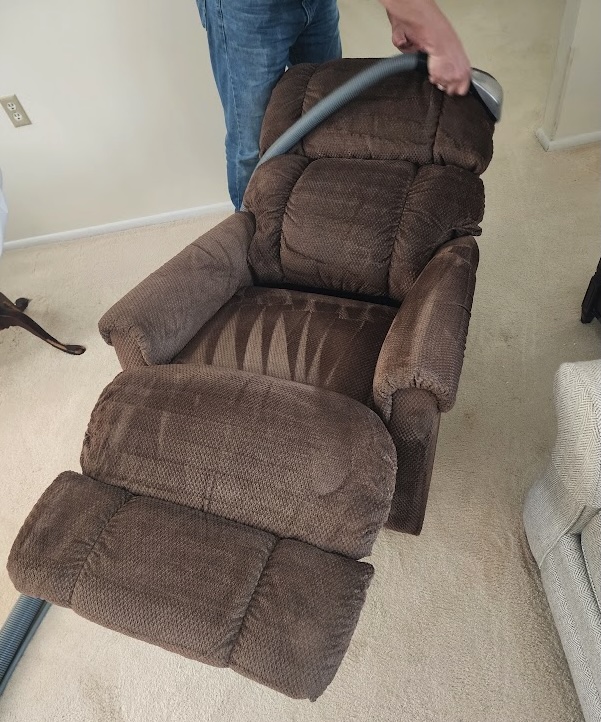
Why Distilled Water Is the Better Option for Cleaning Upholstered Furniture
Distilled water contains no minerals. This simple difference makes a significant impact when you clean upholstery. With distilled water, you avoid rings, residue, streaks, and deposits that can damage fibers. When you mix a cleaning solution using distilled water, it performs more consistently and rinses more effectively.
Because it leaves nothing behind, distilled water keeps the fabric soft and helps maintain the original feel of the material. It also reduces the risk of re-soiling, since dirt has nothing to cling to once the furniture dries. For homeowners interested in regular cleaning that protects their investment, distilled water is one of the easiest upgrades to a safe, more effective process.
How to Clean a Couch Using Distilled Water
Before cleaning, always check the manufacturer’s tag for specific instructions.
Follow these steps for a safe and effective cleaning process. It works for many upholstery types, but always check the manufacturer’s tag first and perform a spot test in an inconspicuous area.
- Vacuum Thoroughly: Use a soft brush or upholstery tool to remove debris, dust, loose dirt, and pet hair from crevices, cushions, and seams. A lint roller can help lift anything left behind. After cleaning, you may also want to remove furniture dents from carpet that can result from heavy pieces.
- Review Upholstery Codes: Look for W, WS, S, or X on the manufacturer’s tag. Upholstered items typically have a code system (W, S, WS, X) that helps you identify the right type of cleaning product to use. These codes indicate which cleaning products are safe to use on different fabrics:
- W means water-based cleaners are safe.
- S means only solvent-based cleaners should be used.
- WS means both water-based and solvent-based cleaners are suitable.
- X means only vacuuming is recommended, and no liquids should be used. Understanding the upholstery cleaning codes can help you maintain the beauty and longevity of your furniture. If your material is safe for water-based solutions, you can proceed with the method below. Avoid saturating fabrics at all times.
- Mix a Gentle Solution: Combine one cup of distilled water with a small amount of gentle laundry detergent. Stir until the liquid becomes slightly foamy. This creates a light cleaning solution appropriate for many fabrics.
- Spot Test: It is important to test any solution on a hidden spot before applying it to the main area. Apply a small amount to a hidden section of the upholstery with a microfiber cloth or microfiber towel. Check for color change or texture change before you clean the whole couch.
- Start Cleaning: Lightly spray the solution on a microfiber cloth, not directly on the furniture. Gently scrub stains, spills, and dirty areas, keeping the cloth only damp. Do not soak the fabric.
- Rinse with Distilled Water: Wipe each area with a clean damp cloth dipped in distilled water. This step prevents residue and allows the fabric to dry evenly.
- Dry Properly: Blot with a dry cloth to remove excess liquid. Allow the piece to air dry completely. Increase airflow to speed the drying process. Good airflow reduces odors and prevents new stains.
This method works well for routine maintenance and helps you deep clean upholstery without causing damage.
Other Effective Ways to Clean a Couch at Home
Here are additional methods homeowners in our Jersey Shore service area rely on for safe, effective upholstery cleaning.
Baking Soda Refresh
Baking soda is excellent for lifting odors and breaking up surface dirt. Sprinkle it across the entire surface of the couch, wait 20 to 30 minutes, then vacuum. This method helps clean furniture safely between deeper treatments and is especially useful when you need to refresh throw pillows or slip covers.
White Vinegar Solution for Tough Stains
Mix one cup of distilled water with a small amount of white vinegar. Apply to an inconspicuous area first. This mixture helps remove tough stains, pet stains, and stubborn stains caused by spills. Use a sponge or microfiber cloth to dab (not rub), then rinse with distilled water. Always air dry.
Using an Upholstery Cleaner
For deeper results, a portable upholstery cleaner with water-based cleaners can help wash and rinse fabric more thoroughly. Fill the machine with distilled water to prevent mineral marks. Use the upholstery tool on the cushions and arms, working slowly to avoid saturating the material. Extract as much liquid as possible to reduce drying time.
When DIY Methods Are Not Enough
DIY cleaning can help maintain upholstery, but mineral deposits, heavy dirt, pet stains, and liquid spills often require professional attention. Our technicians at GM Carpet Care use advanced equipment, safe water-based solutions, and controlled drying methods to deep clean, restore color, and protect delicate fabrics. Regular cleaning performed by professionals reduces odors, extends the life of furniture, and keeps homes across Monmouth, Ocean, and Cape May Counties healthier.
If your upholstered items have stains that will not lift, or if you want to protect high-value pieces like sectionals or heirloom chairs, our team is ready to help.